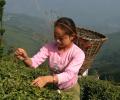
Competition from Nepalese teas -- which has duty free access to the Indian market -- has emerged as a lower-cost alternative to Darjeeling tea, challenging its viability.
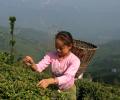
The famed Darjeeling tea may have slip to a new production low in 2025, as changing weather patterns, a shortage of pluckers and mounting economic stress weigh on the region's gardens.
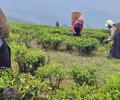
The recent flash floods and landslides triggered by heavy rain in north Bengal have caused massive destruction in at least 30-35 tea gardens in Darjeeling, with reports of loss of plantation areas, deaths of workers and damage to houses of labourers, prompting planters to convene a meeting to assess the situation, stakeholders said.

Geopolitical headwinds leading to lower demand from export markets, coupled with lower domestic buying, have dragged the auction average of Darjeeling tea to its lowest level since 2015. Data from Calcutta Tea Traders Association (CTTA) shows that the average price of Darjeeling tea at Kolkata auctions for January-December 2023 was Rs 319.74 per kg. The last time it dipped below this level was in 2015 at Rs 285.71 per kg.
In the last three years, 20 gardens have changed hands, and 90 per cent of the buyers are from non-tea background.
Scanty rainfall, last year's lockdown, growing competition from Nepal and the disaster of the 2017 Gorkhaland agitation are steadily weakening exports and sales of Darjeeling tea.

Tea planters in Darjeeling have raised that a shortage of commercial LPG, triggered by the ongoing conflict in West Asia, could hit tea processing during the first flush, the delicate early-season harvest that commands the highest premiums and often sets the tone for the year.

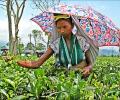
Production between January and mid-March declined by about 5.85 million kg.

Darjeeling is on the boil over the demand for a separate Gorkhaland state. June and July are bad months to have a strike. Tea picking during its most valuable season has been affected. Those consequences will be felt all over the world and ultimately damage Darjeeling tea.


The unrest in the hills has led to the tea sector losing its entire second flush, and Rs 200 crore of its annual earnings.

The world-famous Darjeeling tea is losing its flavour even as it struggles with falling production, says Avishek Rakshit.

The alpona (artwork) on the steep, winding road leading to Makaibari bears testimony to the visit of G20 delegates for the second tourism working group meeting in April last year. The lush tea bushes, the delegates joining in for the moonlight plucking of Silver Tips Imperial first flush, a favourite of late Queen Elizabeth II, cut a picture of mystical magic. But it's not the Kurseong tea garden's only shining moment - the last few years have been busy for the estate and its bungalow.

The tea industry's cup of woes brimmeth - scanty rainfall and pest attacks have dragged down production in May, prices are lower than last year, and demand from some export markets is muted. Production in North Bengal - comprising the Dooars, Terai, and Darjeeling - is majorly affected; parts of Assam are also hit. Arijit Raha, secretary general, Indian Tea Association (ITA), said that the Tea Board numbers for April show a crop loss of about 9 per cent for North Bengal, compared to last year.

Over the years, India has also lost its CTC market heavily to Kenya. And, Sri Lanka, which markets the Ceylon tea brand, has also been able to aggressively tap these markets.

The BJP claimed that the attackers were TMC-backed goons, accusing the Mamata Banerjee government of allowing violence against opposition leaders even in times of humanitarian crisis.
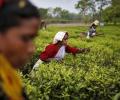
The tea industry, hit by rising costs, falling prices and political unrest in the North Bengal plantations, is especially vulnerable to the COVID-19 lockdown.

'At a time when there was little awareness of world music, playing western tunes on eastern instruments like the flute and the dholak, blending vocal polyphony with Indian folk and contemporary styles, Salilkaku created a new musical genre in Bengal called Gana Sangeet.'

The government has granted Geographical Indications (GI) tag to various products, including Gamosa of Assam, Tandur Redgram of Telangana, and an apricot variety of Ladakh. The commerce and industry ministry said on Wednesday that the total number of GI has reached to 432. "Famous Gamosa of Assam, Tandur Redgram of Telangana, RaktseyKarpo Apricot of Ladakh, Alibag White Onion of Maharashtra have got their GI tags," it said.

Sale of India's specialty tea varieties from exclusive estates in Assam and Arunachal Pradesh are on the rise in the domestic market, and sought after in overseas markets too.
The six AEZs in West Bengal are for pineapple, lychee, potato, mango, vegetables and Darjeeling tea.

The Tata Sons' chairman emeritus has been aggressively investing in start-ups, ranging from e-commerce firms to cab aggregators

In the European countries, one of the pivotal issues is quality control. Once a product is granted GI there is little possibility of fakes, which is not the case in India
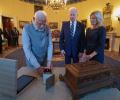
Prime Minister Narendra Modi, who is in the United States for a three-day state visit, has gifted an eco-friendly lab-grown 7.5 carat diamond, placed in Kashmir's exquisite Papier mache box, to First Lady Jill Biden.

Discontentment seems to be increasing by the day in sections of the Bharatiya Janata Party and the Trinamool Congress in West Bengal with several leaders of both camps expressing displeasure over the selection of candidates for the upcoming Lok Sabha elections.

With the first salary date after demonetisation around the corner, will India's labourers be able to take their hard-earned wages home?

'When democracy first came to Bhutan people had no idea and they were like 'What is that?' Oh it's that thing they have in India where the leaders are always fighting and arguing.' When I screened the film to Bhutan's film committee, they thought my film was good but they were concerned about that line. They wanted me to change that line. They said, 'We don't want to offend India.' I tried to tell them that Indians have a great ability to laugh at themselves but they insisted I change it.'

Miss World winners are touring India to talk about periods.

KK Sinha is a director in 2 firms - Gobinda Tea Trading and Kriti Infrastructures.

She wondered why PM Modi is not removing his own cabinet secretary or the Union home secretary, if he was so 'fond of making last-minute changes'.

The Sebi order is vindication of Sinha's stand, but it has not brought him much relief as his money is still stuck.

Rashme Sehgal took a ride on the Gatimaan Express for you.

A large number of rich farmers, who earn more than salaried employees in the cities, get away with paying no tax at all in view of the government's lack of will to consider an agricultural income tax
